


Merge Ragdoll Fighting
4.6560.00 Reviews
App Specs
- Version
- 0.0.61
- Updated On
- License
- Free
- Downloads
- 10,000,000+
- Developer
- CASUAL AZUR GAMES
- Categories
- Arcade
- Platform
- Android
Screenshots
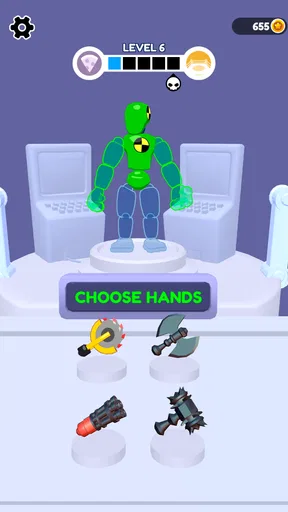
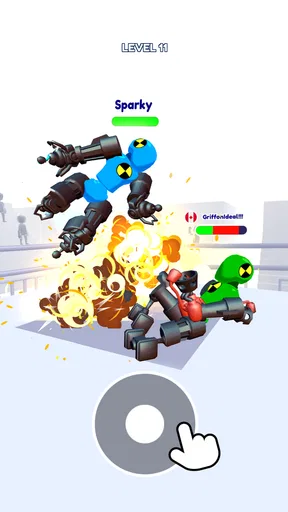
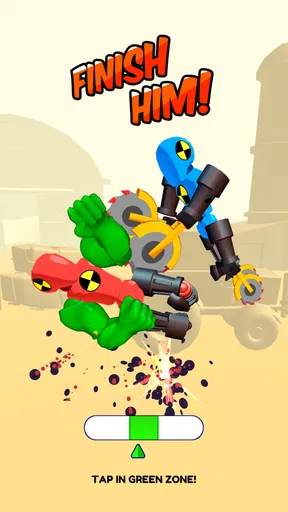
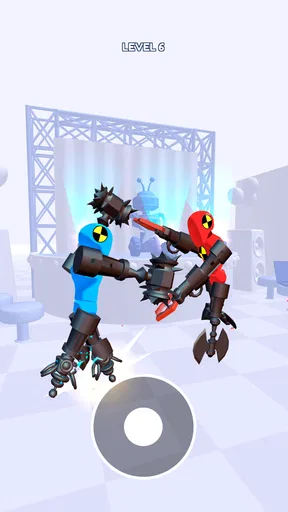
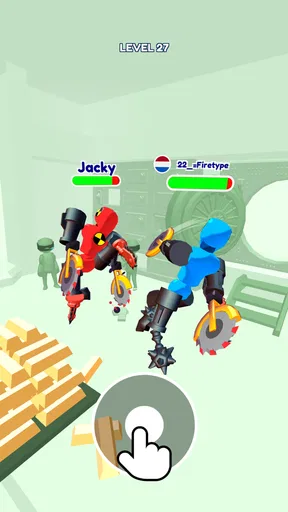

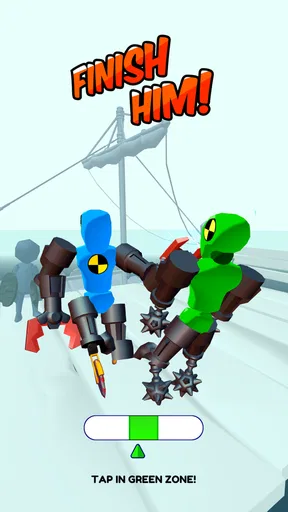
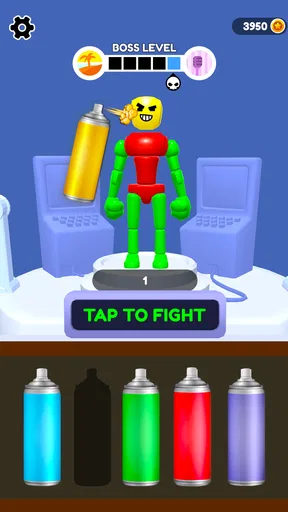
 Analysis by AppCompare
I spent time with Merge Ragdoll Fighting to see whether its simple idea could hold my attention beyond a few quick matches. The game combines monster DNA merging with ragdoll-style arcade fights, creating a playful loop where the immediate goal is easy to understand: build a stronger mutant fighter, then use it to overcome the next opponent. It is made by CASUAL AZUR GAMES, and its free entry makes it easy to try without committing money first.
What interested me most was the contrast between preparation and chaos. Before a fight, the appeal is in deciding which creature traits to combine. Once the battle starts, the soft, unpredictable movement of the fighters gives the action a less serious feel than a traditional fighting game. I would not approach it expecting a deep competitive brawler. I see it more as a short-session arcade game for people who enjoy experimenting, merging, and watching unusual fighters collide.
How the mutant-building loop works in practice
The early objective is refreshingly clear. I am not asked to learn a complicated story or memorize a large control scheme before getting started. The central activity is creating a mutant fighter by combining DNA from different monsters, then taking that creation into a fight. That gives the first sessions a natural rhythm: make a choice, test the result, and look for a stronger combination next time.
That simplicity is important on a phone. I can understand what I am working toward even when I only have a few minutes available. The game suits a quick break because the idea does not require a long explanation. I can open it, make progress toward a better fighter, and leave without feeling that I have abandoned a complex campaign halfway through.
The merging stage is also where the game has more personality than a standard arena brawler. Instead of choosing a conventional warrior and relying only on reflexes, I am encouraged to think about the creature I am assembling. The monster theme gives the decisions a visual identity, while the ragdoll presentation keeps the result humorous rather than overly intense.
My practical advice is to avoid treating every merge as an automatic upgrade. I found the experimentation itself more rewarding when I paused to consider what I wanted from the next fighter. If I simply combine things without paying attention, the process can become a sequence of taps. If I treat each new mutant as a test, the loop feels more purposeful.
Early goals that make the first sessions approachable
The strongest early goal is immediate improvement. I want to see whether the next mutant can handle an opponent that previously caused trouble. That creates a useful personal benchmark even when the game is not presenting a complex strategic framework. A failed attempt is not completely discouraging because it suggests that another DNA combination or another try may produce a better outcome.
Worth Reading Before You Choose

EA SPORTS FC Mobile 26 Is a Bigger Football Game, but It Takes Time

Flipboard Shows What News Apps Must Do Beyond the Feed

Switching to Android Auto Means Rethinking Your Driving Routine

Google Calendar Makes a Crowded Week Easier to Manage

Ludo King Makes the Most of the Minutes Between Plans

Baby Panda World Brings Quick Play to Modern Phones, but Its Game Library Feels Busy
This is a good fit for players who prefer visible, short-term objectives. Someone looking for a large role-playing game with quests, dialogue, and a detailed world will probably find the structure too light. I would recommend it instead to a player who enjoys the satisfaction of building something, testing it quickly, and moving on to the next challenge.
The first few matches also teach an important lesson about the game’s tone. The ragdoll movement means that fights do not always look perfectly controlled. Characters can tumble and react in exaggerated ways, and that unpredictability is part of the entertainment. I would not judge every result as a pure measure of skill. The fun comes partly from seeing how the mutant behaves under pressure.
That makes it especially suitable for casual play with friends nearby. I can imagine showing someone a strange fighter, letting them watch a battle, and discussing which monster combination looks more useful. It is less convincing as a serious head-to-head test where every movement must feel precise and repeatable.
Progress signals and the value of each new attempt
The game’s progress is easiest to appreciate when I focus on the relationship between merging and fighting. A new mutant is not just a collection item in my mind; it is a practical experiment. I want to know whether the new build changes how confidently I approach the next opponent. That connection gives the progression more meaning than simply watching a number rise.
One useful habit is to remember what caused a defeat before immediately trying again. If the fighter struggled because the matchup felt overwhelming, I can use the next merge as a deliberate response rather than repeating the same action. This turns a very accessible arcade loop into a small process of trial and adjustment. It is not deep enough to replace a full strategy game, but it gives the short sessions some thought.
The sense of progress can also depend on how much variety a player expects. I enjoyed the idea of discovering what different monster DNA combinations might produce, but a player who needs constant new modes or a large collection of carefully differentiated abilities may find the loop narrow. The game works best when the act of creating and testing mutants is already satisfying.
For everyday use, I would play it during a commute, while waiting for an appointment, or between larger tasks. A typical session would be to open the game, make one or two decisions about a fighter, attempt a battle, and stop after either a win or a frustrating loss. That structure is convenient because it does not demand the kind of uninterrupted attention that a long match-based game often requires.
The free price is a major reason I would suggest trying it before deciding. The game can be downloaded without an upfront purchase, while optional in-app items cost $11.99 per item. That does not automatically make spending necessary, but it does mean I would be careful before buying anything. I would first decide whether the core merge-and-fight loop still feels enjoyable after the novelty of the mutant theme wears off.
Challenge, control, and the shape of the difficulty curve
The challenge comes from turning a playful construction system into a fighter that can survive the next encounter. That is a sensible foundation for an arcade game, but the experience is not built around the precise control of a traditional fighting title. Ragdoll behavior introduces uncertainty, so some victories feel like a mixture of preparation, timing, and entertaining physics.
I see that as both the game’s charm and its main limitation. When a battle develops in an unexpected way, I am more likely to smile than complain. However, if I lose and cannot clearly tell whether the problem was my decision or the fighter’s awkward movement, the difficulty can feel less satisfying. Players who want exact inputs and dependable competitive feedback should look toward a more technical fighting game instead.
The best way to handle the difficulty is to treat each encounter as information. I would not rush through repeated attempts with the same approach. Instead, I would change the mutant-building decision, watch how the fighter handles the next battle, and compare the result with the previous attempt. This makes the challenge feel less like a wall and more like a sequence of small tests.
Another practical point is patience. The game’s presentation encourages quick action, but rushing every decision can make the progression feel flatter. Taking a moment to consider the next DNA merge gives the player a sense of agency. It also helps separate genuine improvement from a lucky ragdoll outcome.
I would describe the difficulty curve as approachable at the start, with its long-term appeal depending on whether the player enjoys repeating the build-test-adjust cycle. It is not the right choice for someone who wants a carefully balanced tournament ladder or a demanding mastery curve. Its challenge is lighter, more experimental, and tied closely to the amusement of seeing mutant fighters behave unpredictably.
What keeps the loop going, and where retention can weaken
The main reason to return is the promise of a better or more interesting mutant. I want to see what the next combination can do and whether it helps me pass the next obstacle. That is a straightforward retention hook, but it works because the reward is connected to the action rather than placed far away behind a complicated menu structure.
At the same time, the loop can lose force if I stop caring about the difference between one fighter and another. The game needs the merging process to feel like more than cosmetic rearrangement. When I am curious about the result, I keep playing. When the next merge feels interchangeable with the last, the short-session design becomes easier to put down.
This is why I would recommend setting small personal goals. I might aim to clear one difficult encounter, test a new monster combination, or stop after finding a fighter that performs better than the previous one. Those goals make the session feel complete without requiring a long play period. They also reduce the temptation to keep playing only because the next reward is close.
Players should also be aware of the pressure that free mobile games can create around optional purchases. Since individual in-app items are priced at $11.99, I would avoid buying impulsively after a disappointing fight. I would play enough to decide whether the game’s basic loop is genuinely fun on its own. If it is not, a purchase is unlikely to solve that problem.
The Teen content rating is another useful signal for choosing the audience. The monster-fighting theme is presented in an arcade style, but parents should still make their own judgment about whether the tone fits a younger player. For teenagers and adults who enjoy light combat with silly physics, the concept is easy to approach. For younger children, I would consider the rating before handing over the device.
How it compares with familiar arcade alternatives
Compared with a conventional fighting game, this title places more emphasis on creating the combatant than mastering a large move list. That makes it easier to pick up, but it also means I get less control over the fine details of a fight. If I want precise combos, defensive timing, and competitive repetition, I would choose a dedicated fighting game.
Compared with a typical merge game, the battles give the decisions a more immediate consequence. I am not only arranging objects for a satisfying board transformation; I am sending the result into a confrontation. That extra step gives the merging a reason to matter, although players who prefer calm, puzzle-like progression may find the fighting layer too unpredictable.
It also differs from a collection-focused monster game. The appeal here is not primarily a huge narrative journey or a complex creature-training system. The experience is more compact: combine monster DNA, create a mutant, and see how it handles the next fight. I would choose it when I want a playful arcade distraction, not when I am searching for a long-term world to explore.
The audience fit is therefore quite specific. I think it is a good option for someone who likes casual experimentation, short battles, and humorous ragdoll action. I would skip it if my priorities are offline depth, a serious esports-style ruleset, a detailed story, or complete control over every animation and attack.
Device expectations and practical details
The game supports devices running Android 7.0 or later, which covers a broad range of phones and tablets. That makes it accessible to people who are not using the newest hardware. Even so, I would still keep expectations realistic: the experience is designed around quick arcade interaction rather than the visual ambition of a large console-style production.
Its current version is 0.0.61, and the game has already attracted more than 10 million installs. I read that reach as a sign that the basic concept is easy for a wide audience to understand, while the average rating of 4.6 from roughly 14 thousand ratings suggests that many players find the formula appealing. The review count, around 560, adds another indication that the game has generated active player feedback.
Those figures do not change my personal conclusion about the design, but they do help place it in context. This is not an obscure experiment that requires a lot of patience before becoming understandable. The first-time experience is direct, and the central action is communicated quickly. Whether it remains enjoyable depends much more on a player’s tolerance for repetition and physics-driven combat.
I would also recommend checking the device settings before a long session if battery life matters to you. I would not assume that a short arcade game is automatically harmless to battery or storage simply because its controls are simple. For my own use, the most sensible approach is to treat it as a brief pick-up-and-play title rather than something I leave running continuously.
My progression verdict after weighing the full loop
My overall impression is that the progression succeeds when I actively participate in the experiment. The early goals are clear, the mutant-building idea gives each attempt an identifiable purpose, and the fights provide quick feedback. The challenge is approachable because I can learn through repeated tests, but the ragdoll behavior prevents the game from feeling like a precise technical fighter.
The pacing is strongest in short bursts. I can make progress without reserving a large block of time, and the next battle is usually a natural reason to continue. The pacing is weaker when I expect every new attempt to introduce a major change. The game’s lasting appeal depends on enjoying incremental improvement and the comedy of unpredictable combat rather than needing a constant stream of entirely new experiences.
I would recommend downloading it for free if you enjoy arcade games that mix simple decisions with immediate action. I would especially point it toward players who like merging systems but want their creations to do something more active than sit on a board. I would not recommend spending on optional items until the basic loop has proven that it can hold your attention without extra help.
In the end, Merge Ragdoll Fighting is at its best as a compact mutant-building distraction. It does not replace a deep fighting game or a substantial monster adventure, and its physics-driven results may frustrate anyone who demands perfect consistency. But for a quick, accessible game built around creating unusual fighters and testing them immediately, it has a clear identity. The smartest way to enjoy it is to treat every merge as a small experiment, not just a button press.
Pros
- Simple controls make it easy to start playing immediately.
- Short battles suit quick gaming sessions on mobile.
- Physics-based movement creates unpredictable combat moments.
- Character upgrades add a sense of progression between fights.
- Bright visuals and humorous ragdoll animations feel entertaining.
Cons
- Combat can become repetitive after extended play.
- Some outcomes depend heavily on physics rather than strategy.
- Progress may feel slow without frequent upgrades.
- Ads can interrupt the experience between battles.
- The game may offer limited depth for experienced players.
FAQs for Merge Ragdoll Fighting
What is Merge Ragdoll Fighting and how does the gameplay work?
Merge Ragdoll Fighting is a casual action game that combines character merging with physics-based battles. You collect or unlock ragdoll fighters, combine matching units or equipment to improve their strength, and then send them into fights. Battles are designed to be easy to start, with simple controls and exaggerated animations, while progression generally depends on upgrading your team and choosing stronger combinations.
Is Merge Ragdoll Fighting free to download and play?
The game is generally available as a free download, allowing players to begin playing without purchasing it upfront. However, free-to-play games commonly include optional advertisements, rewards for watching videos, and in-app purchases for currency, upgrades, or other bonuses. Before downloading, check the store listing for the current pricing, advertising information, and purchase options available on your Android or iOS device.
Does Merge Ragdoll Fighting require an internet connection?
Some parts of Merge Ragdoll Fighting may work without a continuous internet connection, particularly basic gameplay or previously loaded levels. Nevertheless, an internet connection can be required for advertisements, online rewards, cloud features, updates, events, or purchases. Offline availability may also vary after updates, so players should not assume that every feature will remain accessible without Wi-Fi or mobile data.
Is Merge Ragdoll Fighting suitable for children?
Merge Ragdoll Fighting uses cartoon-style ragdoll combat rather than realistic violence, which may make it approachable for younger players. Even so, parents should review the age rating, advertising content, and in-app purchase settings before allowing children to play. Because progression may encourage repeated play or optional spending, parental controls and purchase restrictions are recommended on shared devices.
What should I know about ads, purchases, and game progression?
Progression in Merge Ragdoll Fighting typically involves collecting resources, merging units or items, improving fighters, and completing increasingly difficult battles. Advertisements may appear between activities or offer optional rewards, while in-app purchases can speed up upgrades or provide additional resources. Players who prefer a completely uninterrupted experience should review the available ad-removal options and disable unauthorized purchases through device settings.


